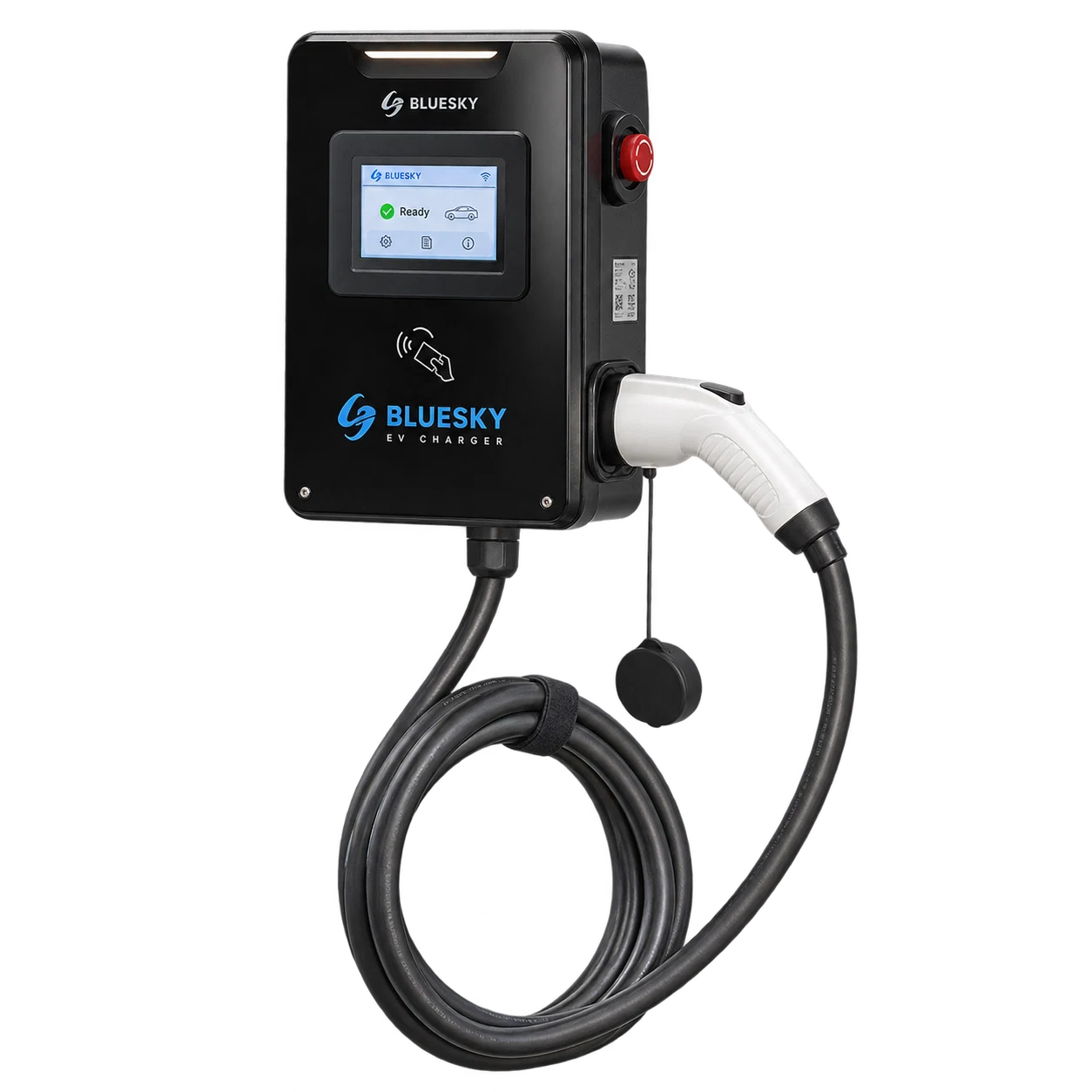
AC chargers suit locations where vehicles remain parked for longer periods, including offices, hotels and private fleets. The vehicle’s on-board charger and the building electrical supply determine achievable charging rates.
Conceptual visualization; not a verified product model
7, 11 and 22 kW are common AC charging classes; available models require confirmation
Vehicle on-board charger capability may limit delivered power
Multiple AC chargers require a coordinated site electrical design
Selecting an AC charger rating
Start with parking duration and simultaneous charging requirements.
Check single-phase or three-phase electrical supply and cable routing.
Wall-mounted and pedestal arrangements depend on the selected unit and location.
Beyond the power rating
Electrical protection and earthing must suit applicable installation rules.
Authentication, billing and backend integration depend on the particular product.
Review enclosure rating, location and manufacturer warranty conditions.
Requesting an AC charging quotation
Share the number of charging points and available electrical supply.
State who will use the chargers and whether charging is public or restricted.
Request the current manufacturer model sheet and applicable certifications.
Frequently asked questions
Does a 22 kW AC charger charge every EV at 22 kW?
No. Many vehicles accept a lower AC rate because their on-board charger is the limiting factor.
Is AC charging suitable for fuel stations?
It can be useful for long-stay parking; quick-turnover sites often also consider DC charging.
What matters when installing many chargers?
Total load, protection devices, phase distribution and appropriate load management.
Tell us about your equipment requirements
Our team will review the model, documentation and project requirements.
 BEYOND THE SKY