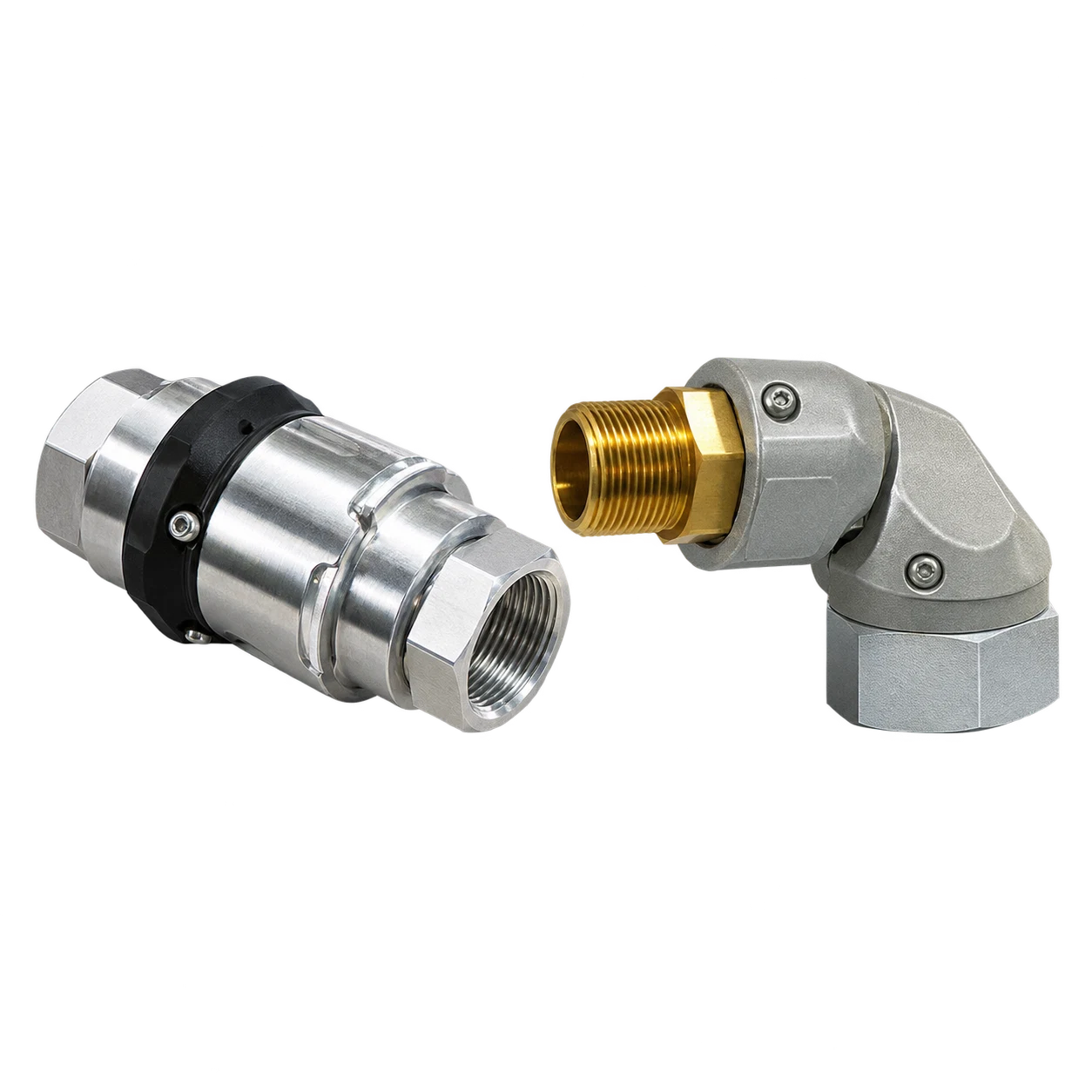
Maintaining fuel dispensers requires compatible mechanical and control components. Beyond coordinates sourcing for breakaways, swivels, flow meters, pulsers, solenoid valves and selected electronics according to equipment specifications.
Conceptual visualization; not a verified product model
Breakaways and swivels perform different functions
Meters and pulsers must match the dispensing control system
Original part numbers help prevent incorrect substitutions
Safety and hose connections
Breakaway couplings are designed to separate under specified pull conditions.
Swivel connectors allow rotational movement and help reduce hose twisting.
Fuel compatibility, thread type and applicable approvals must be verified.
Parts inside the dispenser
Flow meters measure flow within model-specific operating ranges.
Pulsers and electronic controllers transmit or process measurement signals.
Solenoid valves, pumps, circuit boards and displays must be matched to the equipment.
Required information for maintenance sourcing
Photos showing the component and its part number or nameplate.
Dispenser manufacturer, model and fault description.
Quantity, delivery requirements and technical standards.
Frequently asked questions
What does a fuel breakaway do?
A safety breakaway is designed to separate under specified force conditions to help reduce dispensing-system damage.
What is a swivel fitting for?
A swivel allows the hose/nozzle connection to rotate, reducing twisting stress.
How does a flow meter differ from a pulser?
A flow meter measures fuel flow; a pulser produces measurement signals for a controller, with details varying by model.
Tell us about your equipment requirements
Our team will review the model, documentation and project requirements.
 BEYOND THE SKY